Archives October 2026

AI Will Drive A Rapid Evolution In Language

Language evolves. Could AI mean the end – or a dramatic slowing – of that evolution? After all, if AI starts doing most of the writing for us, perhaps we should expect a global “sameness” in language. Outside of asking AI systems to write like a pirate, the argument goes, language as it was when AI was invented is more or less how language will be going forwards as that’s what the AI systems were trained to produce.

In fact, I think the opposite will be true. I believe the advent of AI will mean language will evolve more quickly than before.

AI Will Usher In A Brand New World

In an essay for The Economist, Susan Schneider asks us to imagine a world where AI “hands us science that looks like magic”. There’s a sense of foreboding in how she describes it, but I envision such a world with excitement! I absolutely think AI is going to enable new inventions (scientific, cultural, economic and more) that are going to dramatically improve the world. Those inventions may seem magical at first – as new inventions often do – but with time and with further help from AI, we’ll understand the seeming magic and then work on propagating those discoveries.

This brand new – substantially improved – world will require new terminology and language to help explain and describe it all.

The sentence: “my phone uploaded the photos it took to the cloud” would seem nonsensical 30 years ago. We’re similarly going to see advancements that are going to require new language in the years ahead.

AI Will Spread Words Across Languages

Schadenfreude is a German word that means to take pleasure in someone else’s misery. English has no equivalent word, but because it’s a useful word, the German word has been adopted by English speakers.

It’s likely there are many such useful words hiding across the world’s languages – and with AI being the world’s best polyglot we finally have a system that can understand them all and pick out the words that other languages lack. I asked Copilot to come up with some examples and these are the ones I liked:

Tartle (Scots)
That awkward hesitation when you’re introducing someone because you’ve suddenly forgotten their name.

Aspaldiko (Basque)
Associated with meeting someone again after a very long absence and the pleasure of that reunion.

Cafuné (Brazilian Portuguese)
The affectionate act of gently running your fingers through someone’s hair.

Gigil (Tagalog)
That almost uncontrollable urge to squeeze or pinch something because it is overwhelmingly cute.

Age-otori (Japanese)
The unfortunate experience of looking worse after getting a haircut.

With AI we will hopefully see more of the world’s vocabulary enter the common vernacular.

Humans Will Become More Innovative In Their Use Of Language

As photographic technology  spread and it became possible to faithfully recreate an image of our surroundings through a camera, painters started to create more abstract works. Their ability to make a replica of what they could observe was no longer as valued. This led to an exciting new era of art where we imagined beyond what we could see.

I similarly expect that writers will become more experimental in their use of language now that AI systems can, finally, write as well as humans. Rather than a threat human writers should treat this as liberation and a license to innovate.

For human writers, outside of just the pleasure of experimentation, doing so has a couple advantages that are immediately obvious. First, it will make it clear that the text isn’t AI. Just like we give additional value to artisanal things that are made by hand over those mass produced by machines, we’ll similarly add a premium to text that isn’t AI generated. Indeed, most of us already do. By using experimental language that an AI would never use, a writer will be able to make clear that it was written by them.

Second, and this may contradict my first point, but by having a signature style, it’ll be easier for the AI to write something in a particular author’s voice. I can imagine, for example, in a debate with a colleague, wanting to respond to an argument based on a post I’ve published on this blog, and asking an AI system to draft my response in my voice based on that blog post. By having a signature style of writing that the AI will be able to replicate, I’ll likely find it easier to paste in the AI response.

I have for decades been stubborn about mixing British, American, and Indian English. The British “learnt” is so much more phonetically pleasing than America’s “learned”. “Colour” without the “u” feels less colourful. But the British are wrong about “maths” – it should just be math. And Indians are onto something with prepone. I like to believe that my refusal to conform – even when it meant losing marks in exams or being quietly mocked through red underlines by Microsoft Office, or, according to one career advisor, being passed over for job opportunities due to the seeming misspellings on my resumé– will soon be seen as natural for those who enjoy writing.

Of course some of those experimental new approaches to language (by writers far more skilled than I) will receive widespread appreciation and will eventually be adopted as common grammatical norms learnt by all – including AIs.


I’m excited to see how language will evolve! Thanks to Sean and Fawaz for the conversation that helped me develop these views.


Some Of The Things I Learnt During My Time In Bollywood (Part 2)

My company helped produce some award-winning films! We decided to move on to more lucrative opportunities though.

Read part 1 of what I learnt along the way over here.

Money Is Probably Why Disha Patani Doesn’t Do Many Movies

We never worked with Disha Patani in any kind of capacity. But anytime someone compares her subsequent body of work with the reverence that she was treated with after her breakout role in M.S. Dhoni: The Untold Story, to conclude that her career hasn’t lived up to its potential, I feel they’re missing what’s actually going on.

It doesn’t make any financial sense for Disha Patani to act in films. She makes an order of magnitude more money from ad shoots than she would from a movie. Any time spent showing up to a film set (or doing dubbing, or press tours, or wrap parties) is a big financial sacrifice for her – along with all the attendant risks of people saying she’s tough to work with because she won’t, for example, make herself available for extra shooting days (i.e., sacrifice more money than she already has).

All of this is compounded by the gender imbalance in the industry. Women earn a fraction of what men earn, and the male stars will often end up deciding when and how long a shoot will last for, while the female “co”-star is expected to fall into line. The disdain with which women are treated can be shocking. I once had a casting director tell me that he expected to be able to get “a girl” for a two-month shoot for ₹10-15 Lakhs (~$13,000). He was talking about a National Award Winner. It’s terrifying to imagine what less well-known female faces in the industry face.

So picking a film over an ad shoot means that Patani is earning pennies when she could be earning dollars, to be treated as a second-class citizen by the cast and crew. This will be in contrast to the glamour-treatment that brands – run by professional MBAs with sensitivity and diversity training – will give to celebrities endorsing their products.

We don’t think cricketers that focus on the IPL instead of a Test career have performed below their potential. We understand and respect the need for them to build a financial cushion in the short period of time when their bodies are in peak demand.

The actors with a prolific filmography are often envious of stars like Patani that, somehow, people know, talk about, and see in brand campaigns, despite them not performing in many films.

The Financial Incentives In Bollywood Are Very Different From Those Of Hollywood

Hollywood unions have negotiated a system of residuals. Actors, directors, and writers can continue to receive residuals for movies and TV shows that they were part of decades ago. If Netflix brings a movie to streaming you can expect that the cast saw some of the money from the deal.

Bollywood doesn’t operate like that at all. Stars are often paid for the number of “shoot days”. After the movie is released it’s rare for them to be directly impacted by the financial success of the movie. (They will be indirectly impacted – a super hit will mean more ad offers).

That’s likely one of the reasons why stars are so interchangeable in Bollywood sequels. If I’m a Hollywood actor I know that if the sequel does well then I can also expect sales of the movie that came before it to see a bump – alongside my residuals. I thus have an incentive to contribute to that specific cinematic universe because it means more money for me. As a Bollywood actor I’m largely indifferent to the success of my past body of work.

Indeed, that’s why sequels aren’t that big in Bollywood in the first place. The producers of the movie will have an incentive to make sequels to a blockbuster film…but all the cast and crew now know how successful the film was and will ask for a significant pay bump. The incentives of the industry discourage the kind of sequel and cinematic universe heavy storytelling that are common in the West. Or they lead to sequels such as Cocktail 2 where none of the original cast returns – something that’s almost unheard of in the West.

It’s also why you’re probably not attracting the very best writers. A Hollywood writer that makes an era-defining film can expect to live off the residuals for decades if not a lifetime. A Bollywood writer can expect no such security. Beyond the (meagre) amount they would have been paid for writing the script, all they can hope is to negotiate a better fee for the next project.

Nepotism Is A Natural Consequence

Perhaps because those looking for a financially rewarding career can expect much more lucrative opportunities outside of Indian entertainment, my experience was of an industry that lacked a certain degree of professionalism.

What if an actor abruptly decides that they feel too tired to shoot. What is the production team going to do? Risk incurring the wrath of the actor by going to the press? Or meekly accepting what has happened and telling the rest of the cast and crew that the shoot won’t happen that day. Remember everyone still has to be paid for that day. You also have to pay for the equipment, the set, and everything else.

The reverse happens too. What if the producer doesn’t pay you? What is the actor going to do? Sue? The Indian legal system is so slow that there have been instances of judgments being rendered after litigants have passed away. And by going to the courts the stiffed actor will be telling other film producers both that the actor is difficult to work with, and that the actor is seemingly not worth very much money.

So much of actor negotiations for a film involve the structuring of payments. How much will be paid before the shoot begins? How much halfway through the shoot? What will be paid only after dubbing is complete? As a film nears completion you can expect the producer to start making more and more excuses for why payments are delayed.

In a low trust society with poor legal enforcement mechanisms family ties matter a lot more. A budding young actor is far less likely to refuse to show up for a shoot if they grew up calling the producer Chacha. For a producer that’s staking a large amount of money on a project with, statistically speaking, very little chance of earning a decent return, it’s enticing to go for the lowest risk option. Indeed, you can also hope that the young star’s more famous family members will help promote the film for free giving you an extra incentive to bet on the familiar.

Some Of The Things I Learnt During My Time In Bollywood (Part 1)

I mentioned in my kickoff post that my company has pivoted at least four times. One of those pivots involved a stint as Bollywood producers. We had the chance to work on several award-winning productions and stars though it became clear to me that my company’s immediate future lay outside of the industry.

Still, it was an incredible experience that taught me a lot.

There’s A Lot Less Money Than You Think

The Shahrukh Khan movie Jawan was a superhit blockbuster that grossed ₹1,148.32 Crore. At the time it was the second highest in all of Indian entertainment history.

Converted to US Dollars using the exchange rate at the time, that means this era defining financial blockbuster grossed…$139 million. Or about as much as Shazam! Fury of the Gods, which was released in the same year. The Hollywood Reporter called the box office collections of the Shazam sequel “dismal”.

And remember that’s the very best that Bollywood has ever done.

Think of all the other movies that were made in India that year…that decade. How many of them made any kind of “real” money?

Even the $139 million that Jawan made is a lot less than it sounds. Copilot suggests that 55% of that would have been kept by the movie theaters. So the movie producers made $76 million. Copilot further estimates that $37 million would have gone into production (excluding actor salaries) and another $10 million would have gone into marketing. So that leaves $29 million for the actors, directors, writers, and investors.

And I know I’m repeating myself but it’s important to appreciate – we’re talking about the best that Shahrukh Khan, “King Khan”, the Baadshah of Bollywood, the most successful actor in Indian cinematic history, has ever done!

Think of all the hundreds of names that show up in the credits of a movie. After you subtract what the top stars are making how much does everybody else really make? Especially given that other movies aren’t anywhere near as successful as Jawan!

This Is Why Bollywood Tries To Cater To A Western Audience

Why was the Ramayana trailer released in both English and Hindi? Why did its producers get Hans Zimmer on board? Why are they trying to get the media to talk about it in the same breath as The Odyssey or Dune? Because all the money lies in international markets.

If a box office disaster like Shazam can outgross the very best that Bollywood has done, producers will do whatever they can to get even a small amount of Hollywood’s gold dust to rub off on their production.

You’ll Continue To Find Comparisons To Western Films Underwhelming

Here’s another comparison for you: The first Season of House of the Dragon reportedly cost $200 million. That is to say the budget of a small screen TV show sequel in America is more than what India’s biggest, most successful big-screen financial blockbusters can earn in revenue.

Why is it that the VFX, sets, and overall production quality are often so much better in American films? Especially given that much of the computer animation work is ultimately outsourced to India? Because Western productions have budgets to afford it. It’d be a financial catastrophe for Indian producers to invest the kind of resources into a project that Western producers are able to.

Stars Work With The Press To Mislead

I learnt that movie stars in India often “leak” to the press how much they were paid for a movie. But the number they leak is fake. They’ll deliberately quote a much higher rate than what they’re actually being paid…especially when they’re in the middle of negotiating a new project.

Unsurprisingly Indian Movies Don’t Often Win International Acclaim

With each Indian movie being worth so little, for actors it typically makes more sense to focus on quantity instead of quality. Akshay Kumar released as many films in 2025 as Tom Cruise did in the nine years between 2017 and 2025. An actor’s time is limited – at best they can shoot 365 days a year. Realistically it’s a lot less – it’s unlikely schedules will work out in a way that allows them to optimize their availability. So if a director wants to re-do a scene because they had a stroke of artistic genius, it’s more likely than not they won’t be able to get the actor to show up for the retake, because the actor has already committed those dates to another project.

The financial reality of the industry means that it’s unlikely that the Indian entertainment industry will produce the kind of artistic films that win international acclaim and awards – at least until Indian cinema becomes a lot more lucrative than it is.

That’s Why There Are So Many Brand Endorsements

Just like cricketers make far more money from ads than they do from playing cricket, so actors’ livelihood depends on ad shoots. An actor can often earn as much in a day of shooting for a brand, as they would in an entire month of shooting a movie.

The stars I worked with were a little beyond doing “item numbers” but I would similarly imagine that the financial rewards of doing them, compared to the time commitment involved, make them enticing.

The phenomenon of actors doing side gigs such as ads isn’t unique to India….though perhaps the ability to get top Bollywood stars to perform at your wedding is. That may, however, say more about the amounts that Indians are willing to spend on weddings compared to those abroad.


Read part 2 here. I should note while I use Jawan as an example my company wasn’t involved with the production of that film (or any other film I’ve mentioned here or in the next post). I’ve also used a photo of Shahrukh Khan, and while I was lucky enough to go past the dressing room at Yash Raj Studios that he was in a couple times, I’ve never met him or directly worked with him.

…And You Believed Them?

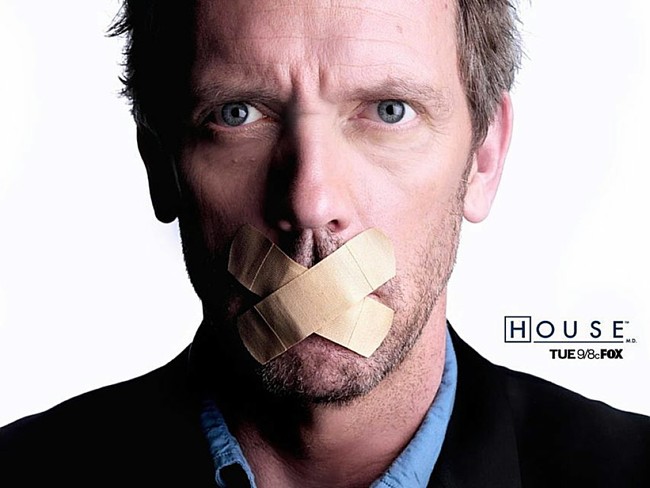
The fictional Dr. House’s adage is a good rule of thumb: everybody lies.

Specifically, when it comes to hearing compliments about yourself in business (…and otherwise) you should be deeply skeptical.

Your suppliers, of course, will compliment you because they rely on you for their business. Your subordinates will compliment you because what else are they going to do?

For your supervisor a compliment is an easy way to give nothing of particular value.

Even your customers’ compliments should be treated with deep suspicion. After all – they selected you. It’s in their interest to convince their team members (and perhaps even themselves) that they made the right decision. Or perhaps they’re hoping for a discount. Maybe they’re practicing some version of networking. Possibly they’re hoping you’ll someday hire them. Maybe they just want you to go away.

What if it’s not their motives that are suspect but their character? Is the person giving the compliment someone whose judgment you trust? Should you?

Perhaps it is someone who you trust deeply which raises its own set of problems. As Milton Mayer wrote so articulately in They Thought They Were Free: “…your close friends, who are, naturally, people who have always thought as you have.”

All of this suggests a deep cynicism on my part but it’s not really. I’m not a cynical person. I don’t at all, for example, think that the motivation behind all or most compliments is nefarious or strategic. Indeed, in the moment, the person giving the compliment can believe it with all their heart. You should still be skeptical though.

We’ve all probably had the experience of making a commitment – perhaps to see someone again, or to send them an email, or to wish them a happy birthday – that we truly intended to honour at the time. But as time passes by the version of you that made that commitment can seem a little alien. The date that you set a reminder for arrives and you realize it’d feel a little awkward to reach out to them now – even though your past self was so sure at the time you would.

Maybe you’ve made or have been given such romantic vows.

It’s a story that Khaled Hosseini also tells in And the Mountains Echoed. In it there’s a character Idris who, during a visit to Afghanistan, makes a promise to help a girl named Roshi get important medical treatment. The reader can feel that Idris was genuine in his commitment, but once he returns to the United States, and life catches up to him, and he thinks about the complexity of trying to pursue what he has promised, he begins to procrastinate and ultimately doesn’t fulfil his commitment. This failure haunts him for decades.

All this is to say that it’s possible for a compliment to be completely pure in its intention and motives at the time it was given – and to still be meaningless. This is just a reality of the human condition. The opening sentence of this post is a little disingenuous because I don’t actually think of it as a “lie” per se. That particular version of the person may well have genuinely meant what they sent in that specific moment of time. But it’s a snappy phrase that sums up how compliments should be treated.

Which is why I judge those in business who talk up all the compliments they’ve received. The best possible interpretation is that they’re simply providing testimonials because that can be an important marketing technique (something I can respect). More often than not however, the pride with which they repeat those compliments, makes me fear that they actually believe what they’ve been told. They should know better. It says a lot about them that they don’t.

How then to know you’re doing a good job? I don’t have a great answer. Ultimately I mostly measure myself against my own standards – not those of others. I know I’m doing a good job if I feel I’m doing a good job.

Importantly, none of this is true for criticisms. Those you should take very seriously and examine closely, whatever the source. Not all criticism are justified. But unlike compliments, all criticisms should at least be thoroughly evaluated.

This quote from Terry Pratchett summarizes well – or at least echoes – my perspective on compliments and criticisms: “The presence of those seeking the truth is infinitely to be preferred to the presence of those who think they’ve found it.”

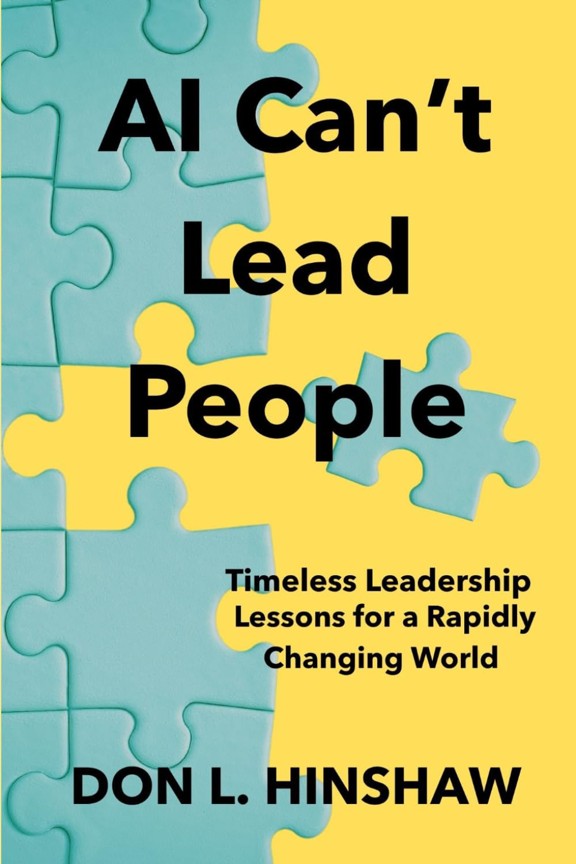
Reading AI Can’t Lead People: Timeless Leadership Lessons for a Rapidly Changing World

On the recommendation of a client who had worked with the author, Don L. Hinshaw, I picked up the book AI Can’t Lead People: Timeless Leadership Lessons for a Rapidly Changing World.

There Was Much I Learnt From And Liked About The Book

After reading the book I vowed to go back and review the pricing one of my clients is getting from its suppliers, looking, as Hinshaw would put it, “for gold”. I’m certain that we can negotiate better value than what we’re getting. I also committed myself to helping diversify that client’s suppliers so we aren’t so dependent on a small number of providers. More generally, I liked the idea of requiring CEO approval for any pricing increases from suppliers – it helps give team members who are actually talking to the suppliers an important negotiating lever.

Hinshaw wrote that companies that have frequent stock-outs typically also have too much inventory. That line made me pause because that’s exactly the problem that one of my clients is dealing with – both stock-outs of key SKUs and, in general, too much inventory. Reading that the two are so often linked was thought provoking.

The book also had a short but impactful playbook on what needs to be done immediately before and after a merger is announced. If I’m ever in a role where I have to help support or lead a merger, I’ll be reaching for the book to re-read that section.

The book featured the quote “what I’m seeing is drowning out what you’re saying” which I probably would never actually say to someone – it can come across as hostile and end discussion – but is certainly what I’ll likely be thinking in future circumstances. It articulates well a feeling I’ve had in the past.

There was much else that Hinshaw wrote that I agreed with. Laughter is the sign of a healthy workplace. There are no secrets – that is to say shortcuts – for achieving hard things in business. Industry experience is dramatically overrated – indeed it can actually be a hindrance when you’re looking to change how things are done. Customers are every department’s job – something that functions like Legal, Compliance, and HR often seem to forget.

But I Also Disagreed With Some Important Points

As I’ve written before, I know I’m disagreeing with people who have achieved much more than I have. Still disagreements help you figure out what you believe.

Pretty much everything I liked about the book was in the second half. Much of what was written in the first half didn’t quite resonate with me.

Outlining A Worthy Culture

Most importantly Hinshaw keeps returning to the importance of culture – which I agree with – but I found his prescriptions for what a good culture entails to be severely lacking. His very first point, for example, is that meetings must start on time. Which seems…very small.

Punctuality is no doubt important. Someone late to a meeting isn’t respecting the time of their colleagues. But I’ve never had much of a problem dealing with it. If a person shows up late, I tell them sternly and in front of everybody that it’s not okay and that they can’t disrespect their colleagues’ time in this way. Given that I’m rarely stern the message is delivered – not just to the tardy individual but also to everyone else in the meeting – and I don’t have a problem with lateness again.

If I entered an organization that emphasized being on time as a core part of its culture, I’d immediately dismiss not just that culture but also the seeming small-mindedness of the leadership that came up with it.

This post isn’t really about my organization’s culture, but I’d probably open with expecting curiosity. I want an organization that asks questions, tries out answers, makes mistakes, and then tries something different. (It’s not for nothing that this blog is called “Experiments”). This, to me, is the kind of idea that’s “worthy” of defining what an organization’s culture should be. Many of Hinshaw’s tenets of good culture sound like they belong in a high school classroom rather than in an organization looking to achieve impactful things.

No One Should Be Afraid Of Learning Something New

The book also mentions a few different times that it’s unacceptable for peers to correct their peers in front of their mutual boss. Though this seems to contradict an idea Hinshaw also keeps returning to: people shouldn’t be afraid to speak up. I agree with the latter prescription – which can be in conflict with the former. I don’t have an issue with a peer correcting another peer. Indeed I encourage it – if one person is making a mistake and the other person can see it I absolutely want the other person to speak up, and to be unafraid of doing so. They must, of course, do so constructively and respectfully.

My guess is that Hinshaw is afraid that the person who was corrected will come away humiliated, or fear what their boss will think of them. But to me that’s just the sign of a toxic work culture. In my organization I don’t want people to be afraid of being proven wrong. Another way of thinking about it is that they’re learning something new. It’s a good thing. And it starts from the very top. I’m often proven wrong by my team members and I’m proud to highlight it when that happens. As I’ve written before I want my organization to be one where my own floor is being raised rather than one where I’m the ceiling. I would want that culture to permeate my organization.

Who knows maybe the person wasn’t making a mistake after all. Maybe after the second person outlines the seeming mistake the first person explains that the second person has misunderstood. And that’s okay too, it means that the person who thought they had caught a mistake was actually the one who was making a mistake. And now they’ve learnt something new.

Leaders Can Send A Message By Subverting Expectations

Hinshaw writes about the importance of the leadership team sitting at the head of the table. I’ve often found it far more impactful to do the opposite and sit amongst the team members. It surprises everybody. They expect the leader to be at the head of the table and by not doing so the leader sends a clear message: the leader is willing and open to truly listen (something, it’s worth noting, Hinshaw mentions is important that leaders do). I don’t think it in any way diminishes the authority of the leader. Everyone knows who the CEO is, and they’re going to listen closely to what the CEO has to say no matter where they’re sitting. But by choosing not to sit at the head of the table it shows that the CEO encourages a two-way conversation.

Similarly Hinshaw writes about the importance of a leader providing coaching and mentoring. While he’s not wrong I wince at such terminology. It presupposes that the leader has all the answers. I typically try to frame what Hinshaw would probably call “mentoring” as “co-discovery”. I discuss what I think and the experiences that led me to think that way. I encourage the team member to share their thoughts and opinions. Typically I’ll actually invite them to speak first and then share my perspective adjusted to what they’re saying. Sometimes I’ll be the one who ends up learning something, because it turns out the person I was mentoring actually knew more about the subject than I did. It goes to something Hinshaw mentions in the book – you shouldn’t be afraid to hire people smarter than you.

Some Of The Solutions Can Be Problems…And Vice Versa

Hinshaw writes approvingly about his daughter getting out a customer’s order while in the ER because she’s just that focused on customer excellence. While the customer is, of course, paramount, that really just sounded to me like a poorly led organization. Customer satisfaction should not be dependent on a singular individual. Employees who can’t focus on recovering in the ER of all places probably neglect themselves in other important ways – which ultimately hurts both the organization and the customer.

The book also has a section on management directing a culture of giving back, indicating that this increases employee motivation. Having been in organizations where managers pushed causes onto me that I didn’t really believe in – but would feel obliged to contribute to – “motivation” isn’t really what I felt. I’m all for my team members using company resources to give back – but I let them come to me with proposals for what they would want that to look like, rather than something I push onto them.

Hinshaw opposes hiring family members. Yet, according to McKinsey, that family-owned businesses account for more than 70% of global GDP and about 60% of global employment suggests, at the very least, family involvement doesn’t have to be a hindrance to business success. And this isn’t just no-name mom and pop companies. Walmart, BMW, Koch, and Reliance are all luminaries of capitalism where family plays an important role.

I imagine Hinshaw is worried about all the political ramifications of having family members mixed in with non-family members in an organization. Again, it all comes down to effective leadership and culture. An organization where nonfamily members must be worried about crossing family members is an organization with a toxic culture. The problem then is the culture, not the presence of family members.

It’s A Good Read!

I’m glad I read it! I finished it in a single day. It’s always much easier to write about all that you disagreed with than what you agreed with. There’s really only one way to say “good job” but countless ways to critique.

I’ve only led organizations much smaller than the ones that Hinshaw is seemingly writing about. My disagreements may well be naïveté about what it requires to lead a large organization.

Come Monday, I’m going to make changes to my client’s business as a result of what I learned from this book. I don’t think there’s a better compliment that one can give to a book about business.